The Tagkopoulos Lab
Projects
Scoll down to see our past and current projects. We have 6 ongoing collaborative projects and 13 projects already completed, so this page is far from complete. Still it gives you an idea of the what we do and the methods we employ.
Current Core Projects
-
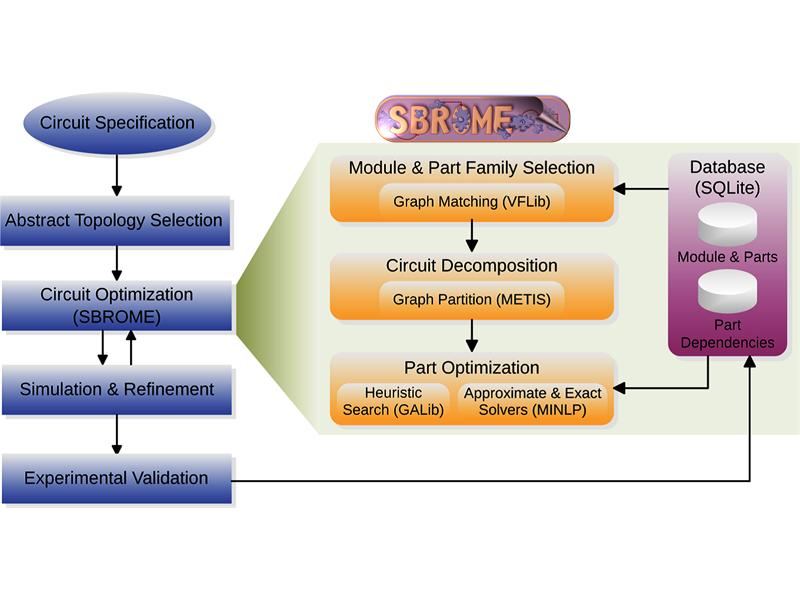
Synthetic Biology CAD Design
Algorithmic and Computational Foundations for Synthetic Biology
The current state of synthetic biology is reminesence of the state of electronics in the '50s: few parts that work well, most of them uncharacterized, very few computational tools for optimal experimental design. A major effort in our lab is to build the algorithmic and computational infrastructure for engineering biological circuits. Efforts in this area include PAMLib, a library of parts and modules with experimentally characterized parameters, exact and approximate algorithms to mix and match parts for optimal design, the Interactive SBROME CAD optimization tool, the OptInfer parameter inference platform from multiple I/O synthetic circuit datasets (see Software page).
Three representative Publications:- Huynh L, Tsoukalas A, Köppe M, Tagkopoulos I. SBROME: a scalable optimization and module matching framework for automated biosystems design. ACS Synth Biol. 2013 May 17; 2(5):263-73. PubMed PMID: 23654271.(link), (pdf)
- Huynh L, Tagkopoulos I. Optimal part and module selection for synthetic gene circuit design automation. ACS Synth Biol. 2014 Aug 15;3(8):556-64. PubMed PMID: 24933033. (link), (pdf)
- Huynh L., Tagkopoulos I., Fast and Accurate Circuit Design Automation through Hierarchical Model Switching. ACS Synth Biol. 2015 Apr 28; PubMed PMID: 25916918.(link), (pdf)
Funding: National Science Foundation (NSF-CISE). -
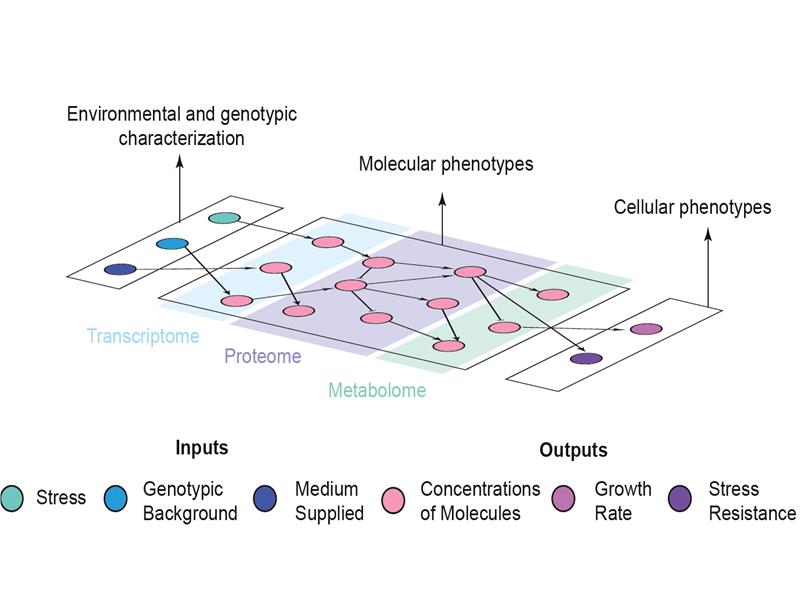
Multi-omics Predictive Modeling
Integrative multi-omics, genome-scale modeling
Multi-omics, is a term that refers to the integration of multiple genome-scale profiling datasets, which usually include transcriptomics, proteomics and metabolomics. Mining such integrative datasets can provide insights on the information content of genes for any environmental condition or genetic background. These datasets can serve as training data for an integrative multi-scale cellular model that can learn to predict molecular expression and traits. Our lab has recently constructed an integrative model based on constraint optimization and we are currently working on multi-scale HPC simulations with artificial neural netoworks.
Ecomics, multi-omics dataset and Clairvoyance, a predictive tool are the latest products of this work (see Software page).
Two representative Publications:- Kim M, Zorraquino V, Tagkopoulos I. Microbial forensics: predicting phenotypic characteristics and environmental conditions from large-scale gene expression profiles. PLoS Comput Biol. 2015 Mar;11 (3):e1004127. PubMed PMID: 25774498.(link), (pdf)
- Carrera J, Estrela R, Luo J, Rai N, Tsoukalas A, Tagkopoulos I. An integrative, multi-scale, genome-wide model reveals the phenotypic landscape of Escherichia coli. Mol Syst Biol. 2014 Jul 1;10:735. PubMed PMID: 24987114.(link)
Funding: Not funded yet. -
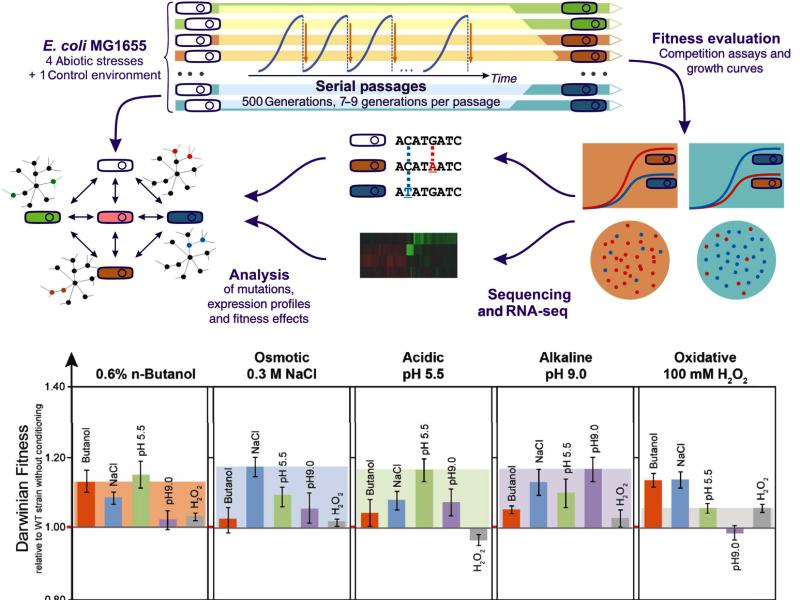
Identifying the genetic basis of cross-stress behavior
Being exposed in stress A can make an organism more or less vulnerable to stress B. Our laboratory aims to identify the mechanisms, mutations and networks involved with cross-stress behavior in the case of E. coli. To identify the genetic basis and evolutionary potential of this phenomenon, we have profiled and evolved more than a hundred cell lines in abiotic stresses (osmotic, acidic, oxidative, butanol) and their combinations. We have then repaired the mutations under the mutant background and assessed its fitness effects using growth/competition profiling. We also used systems and network biology analyses to elucidate latent interactions.
Currently, we work in evolving E. coli in various antiseptics - antibiotics and in quantifying the trajectories, genetic events and fitness effects of the resulting mutations.
Two representative Publications:- Dragosits M, Mozhayskiy V, Quinones-Soto S, Park J, Tagkopoulos I. Evolutionary potential, cross-stress behavior and the genetic basis of acquired stress resistance in Escherichia coli. Mol Syst Biol. 2013;9:643. PubMed PMID: 23385483.(link)
- Zorraquino V.,Quinones S., Kim M., Rai N., Tagkopoulos I., "Deciphering cross-stress responses in Escherichia coli under complex evolutionary scenarios", bioRxiv, doi:10.1101/010595.(link)
Funding: National Science Foundation (NSF-MCB), Army Research Office (DOD-ARO).
Current Collaborative Projects
-
Autophagy network in Plants
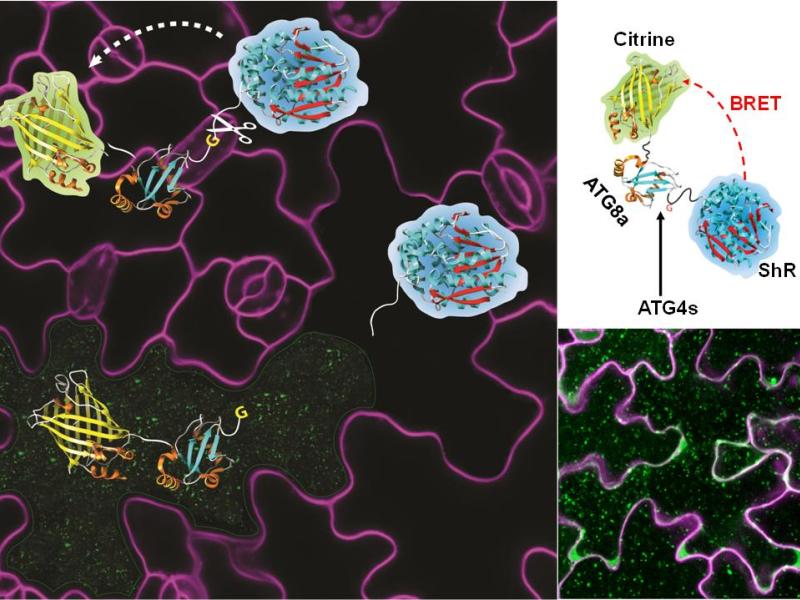
Elucidating the Autophagy network in plants
Autophagy is a dynamic process that entails the engulfment of cellular components that are ultimately targeted for degradation. We provide systems biology analysis and predictive modeling to the Dinesh-Kumar lab to elucidate the key players in autophagy regulation in plants.
Collaborators: Dinesh-Kumar Laboratory, Plant Biology and Genome Center, UC Davis.
Trainees involved: Minseung Kim (Ph.D. Candidate).
Funding: Not funded yet. -
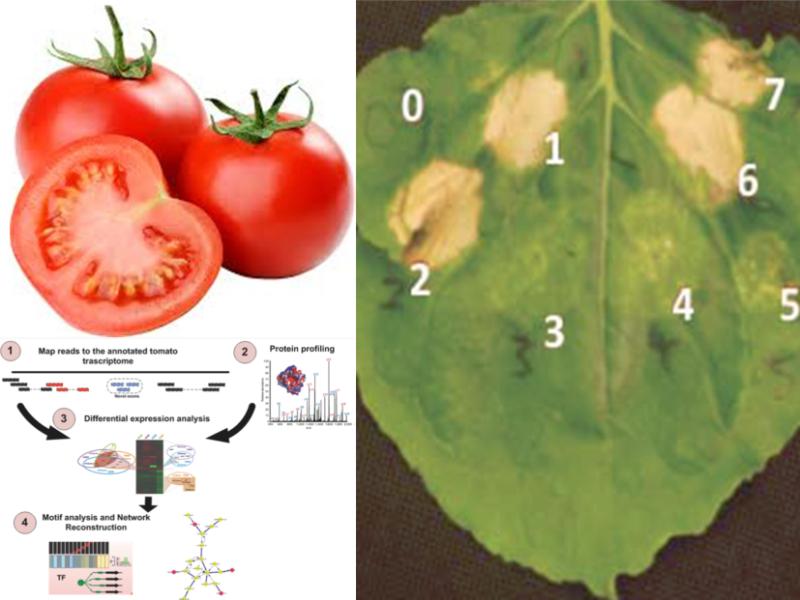
Viral resistance signaling in Tomato
Viral resitance signaling networks in tomato
Tomato, the second most important vegetable crop in the world is threatened by two insect-transmited viruses, TSWV and TYLCV, which cause annual crop losses in excess of one billion dollars. Although the loci of genetic resistance in wild tomato relatives, little is known about the mechanisms involved. The goal of this project is to gain insights into the nature of plant resistance mechanisms to insect-transmited viruses, through an integrative transcriptomics and proteomics approach.
Collaborators: Dinesh-Kumar Laboratory, Plant Biology and Genome Center, UC Davis; Jeff Caplan, UoDelaware; Robert Gilbertson, UC Davis; Diane Ullman, UC Davis.
Trainees involved: Xiaokang Wang (Ph.D. Candidate), Minseung Kim (Ph.D. Candidate).
Funding: National Science Foundation (NSF-PGRP). -
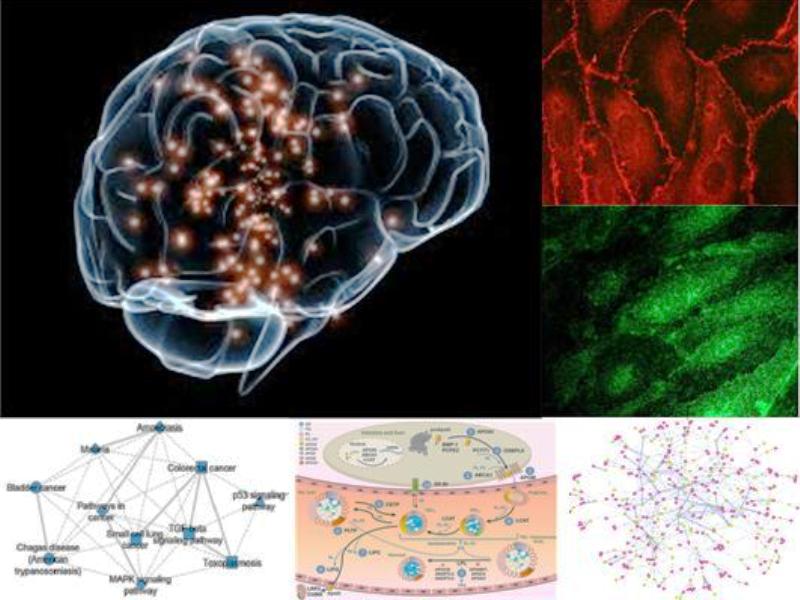
Systems Analysis of TGRL lipolysis effects
Systems Biology of TGRL neurodegenerative pathogenesis
Neurovascular inflammation and immune alterations are strongly associated with a number of neurological diseases. We apply a systems biology approach to identify the specific fatty acids and triglyceride-rich lipoprotein (TGRL) lipolysis products that mediate neurovascular injury. We provide bioinformatics support and computational predictive modeling to integrate heterogeneous data sources for target prediction.
Publications:- Aung HH, Tsoukalas A, Rutledge JC, Tagkopoulos I. A systems biology analysis of brain microvascular endothelial cell lipotoxicity. BMC Syst Biol. 2014 Jul 4;8:80. PubMed PMID: 24993133.(link)
Trainees involved: Athanasios Tsoukalas (Postdoc); Ameen Eetemadi (Ph.D. Candidate).
Funding: Seed funding from the Center for Information Technology (CITRIS) and the Clinical and Translational Science Center (CTSC). - Aung HH, Tsoukalas A, Rutledge JC, Tagkopoulos I. A systems biology analysis of brain microvascular endothelial cell lipotoxicity. BMC Syst Biol. 2014 Jul 4;8:80. PubMed PMID: 24993133.(link)
Completed Projects
-
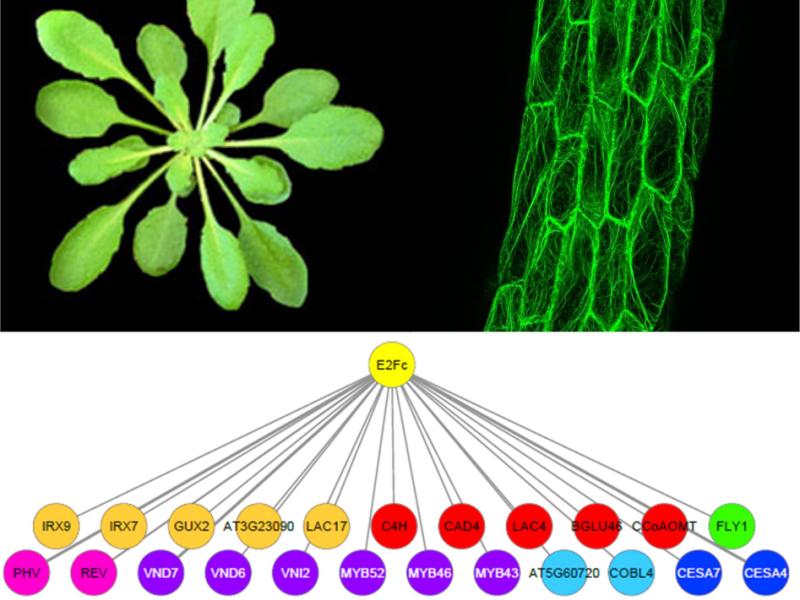
Secondary cell wall regulation in Arabidopsis
Secondary cell wall regulation in Arabidopsis
In collaborations in various plant biology labs, we have applied systems and network biology analysis to elucidate the gene regulatory network for secondary cell wall synthesis in Arabidopsis thaliana, as well as its response under various stresses. We performed network inference, network integration and gene ontology analysis.
Publications:- Taylor-Teeples M, Lin L, de Lucas M, Turco G, Toal TW, Tagkopoulos I. et al. An Arabidopsis gene regulatory network for secondary cell wall synthesis. Nature. 2014 Dec 24; PubMed PMID: 25533953.(link)
Trainees involved: Athanasios Tsoukalas (Postdoc).
Funding: National Science Foundation (NSF-PGRP). - Taylor-Teeples M, Lin L, de Lucas M, Turco G, Toal TW, Tagkopoulos I. et al. An Arabidopsis gene regulatory network for secondary cell wall synthesis. Nature. 2014 Dec 24; PubMed PMID: 25533953.(link)
-
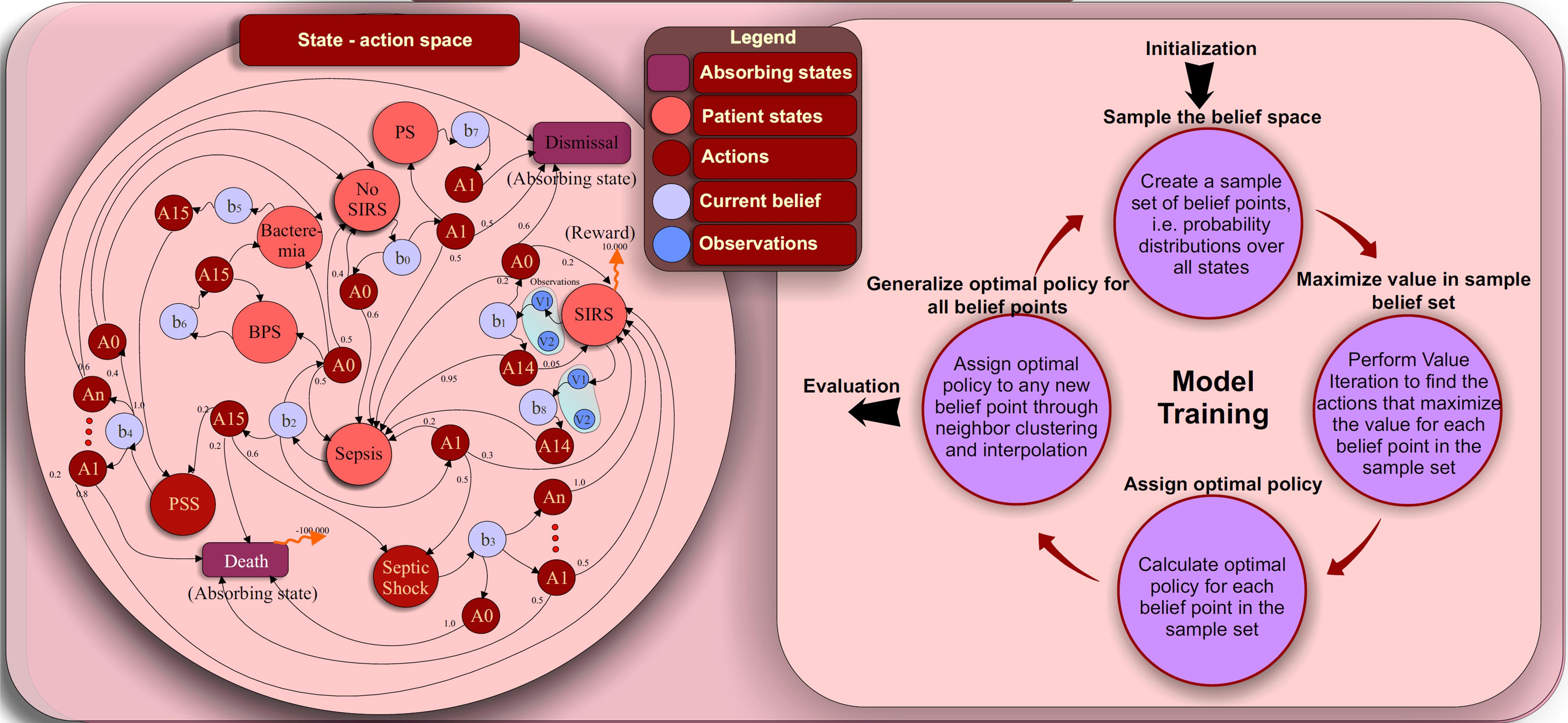
Sepsis Decision Support
Predictive analytics for clinical decision support
Sepsis is an overwhelming immune response to infection, which damages its own tissues and organs. This process can happen at any age, regardless of health condition, and many times from seemingly benign incidents. Severe sepsis, sepsis with acute organ dysfunction, strikes about 18 million people annually (750,000 cases in the United States) and has a high short-term mortality risk (28% to 50%). We trained machine learning models with the Electronic Health Records of 1497 patients that were collected from the ICU of the UC Davis Medical Center. We tailored Partially Observable Markov Decision Processes (POMDP) to identify the optimal policy (actions), given the data, as well as regressors and classifiers to predict mortality and length-of-stay.
Publications:- Gultepe E, Green JP, Nguyen H, Adams J, Albertson T, Tagkopoulos I. From vital signs to clinical outcomes for sepsis patients: A clinical decision support system based on discriminative classification. JAMIA2014 Mar-Apr;21(2):315-25. PubMed PMID: 23959843.(link)
- Tsoukalas A., Albertson T., Tagkopoulos, I. A data-driven, probabilistic machine learning approach to decision support for patients with Sepsis,,JMIR Med Inform.2015 Feb 24;3(1):e11. PubMed PMID: 25710907.(link)
Trainees involved: Athanasios Tsoukalas (Postdoc), Eren Gultepe (MS student).
Funding: CITRIS and CTSC (Seed funding). - Gultepe E, Green JP, Nguyen H, Adams J, Albertson T, Tagkopoulos I. From vital signs to clinical outcomes for sepsis patients: A clinical decision support system based on discriminative classification. JAMIA2014 Mar-Apr;21(2):315-25. PubMed PMID: 23959843.(link)
-
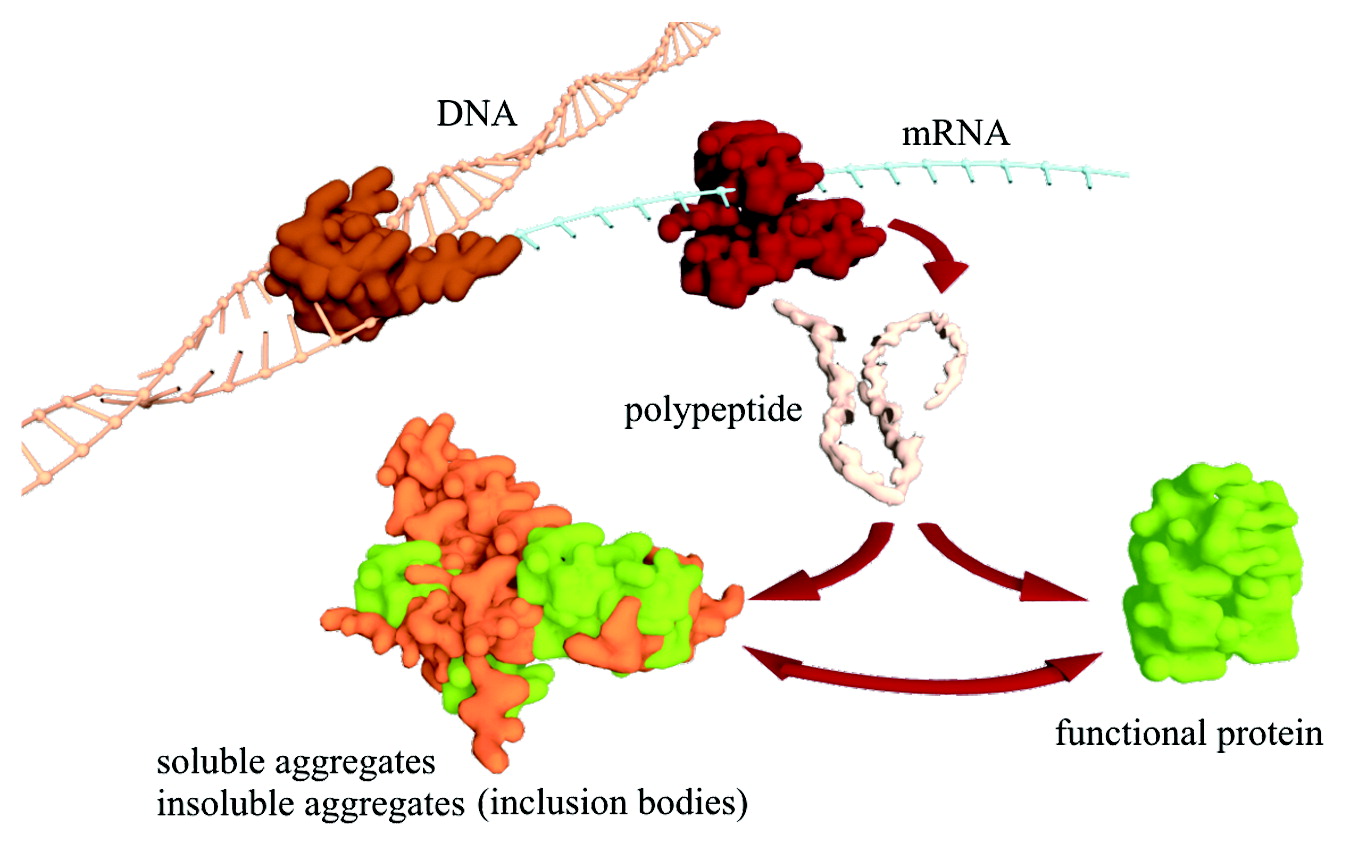
Auto-regulatory Recombinant Protein Production
Self-regulation of Heterologous Protein Production systems
Recombinant Protein Production is a pillar of the biotechnology industry. There is a trade-off between the quantity of protein produced and its quality, as high concentrations of the recombinant protein stress the cell and lead to various issues, such as misfolding and formation of inclusion bodies. We presented a novel approach stemming from synthetic biology, where a stress-induced promoter drives a repressor protein that shuts down the recombinant protein production system, once significant levels of stress are detected. We demonstrated its efficancy in a proof-of-concept system by quantifying the soluble/insoluble fraction and titers of GFP in our engineered strains.
Publications:- Dragosits M, Nicklas D, Tagkopoulos I. A synthetic biology approach to self-regulatory recombinant protein production in Escherichia coli. J Biol Eng. 2012 Mar 30;6(1):2. PubMed PMID: 22463687.(link)
- Tagkopoulos I. Microbial factories under control: auto-regulatory control through engineered stress-induced feedback. Bioengineered. 2013 Jan-Feb;4(1):5-8. PubMed PMID: 22922761.(link)
Funding: Not funded - Dragosits M, Nicklas D, Tagkopoulos I. A synthetic biology approach to self-regulatory recombinant protein production in Escherichia coli. J Biol Eng. 2012 Mar 30;6(1):2. PubMed PMID: 22463687.(link)
IT Lab Computer Science: (530) 752-4821 Genome Center: (530) 752-7707


The Regents of the University of California.
All rights reserved.
Computer Science Department
a
Office: 3063 Kemper Hall, One Shields Avenue, University of California, Davis, Davis, 95616
Kemper Hall on the Campus Map
UC Davis Genome Center
Office: 5313 GBSF, 451 Health Sciences Drive, University of California, Davis, 95616
The GBSF Building on the Campus Map